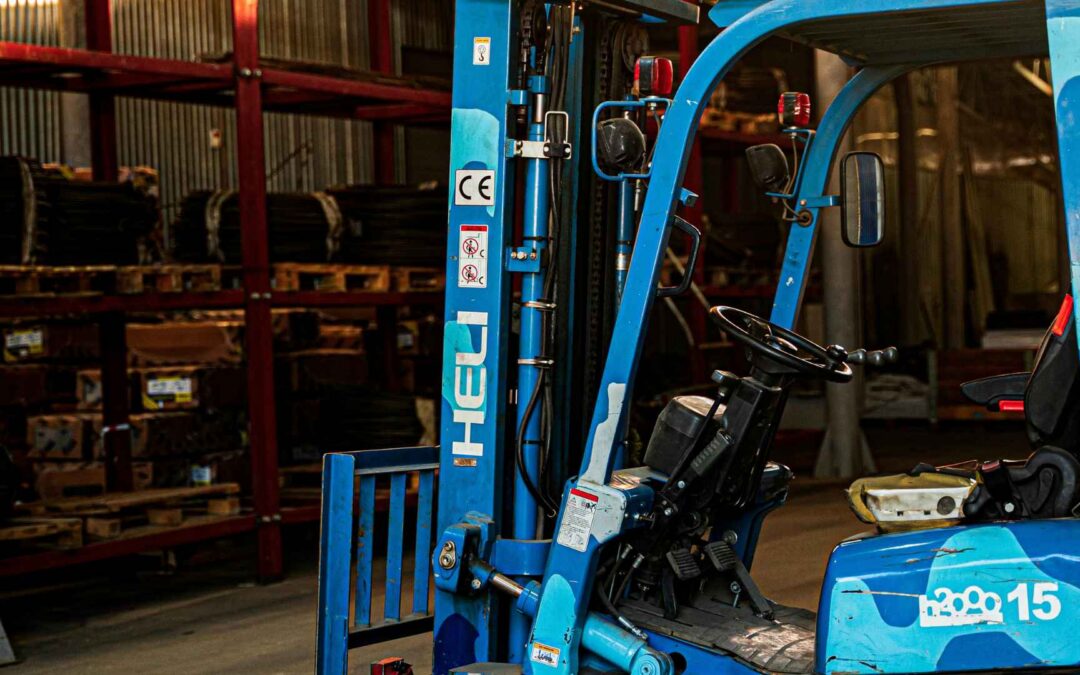
A forklift straight off the factory floor handles the basics well, but most operations end up adding something to it eventually. Forklift accessories cover a wide range of upgrades that improve safety, visibility, comfort, or fit for a specific environment, separate from the heavy-duty attachments like clamps and rotators built for specialized material handling tasks.
This guide covers the accessory categories most operations actually use, and how to think through which ones make sense for your specific application.
Cameras Improve Visibility Where It Matters Most
Rear-view and multi-angle cameras have become one of the more common forklift upgrades, particularly for operations running larger units or facilities with tight aisles and heavy pedestrian traffic. A camera system gives an operator a clear view of blind spots that mirrors alone can’t fully cover.
For warehouses with narrow racking aisles, a camera mounted to show the load and surrounding clearance reduces the risk of rack strikes and product damage. The right camera setup depends on the specific blind spots your facility’s layout creates, since a single rear camera solves a different problem than a full multi-camera system.
Lighting Upgrades for Low-Visibility Environments
Standard factory lighting works fine in a well-lit warehouse, but plenty of operations run forklifts in conditions where added lighting makes a real difference. LED work lights, blue safety lights that project a warning spot ahead of the unit, and red side warning lights are among the most common upgrades.
Blue and red warning lights address a specific safety concern: alerting pedestrians and other operators to an approaching forklift before it comes fully into view around a corner. This matters most in facilities with intersecting traffic patterns or limited visibility around corners. Facilities running outdoor or low-light shifts also benefit from upgraded LED work lighting that improves an operator’s own visibility of the load and surrounding area.
Seat Upgrades for Long-Shift Comfort
Operator comfort directly affects fatigue over a long shift, and standard factory seating isn’t always built for the hours a forklift actually runs in a busy operation. Upgraded suspension seats absorb more of the vibration and jarring that comes with regular operation, particularly on uneven surfaces or outdoor terrain.
For operations running multiple shifts with the same unit handed between operators, a higher-quality seat with adjustable settings accommodates different operators more comfortably than a basic fixed seat. Heated seating is worth considering for colder climates or cold storage environments. Seat upgrades tend to get overlooked in accessory planning, but they carry a real connection to operator fatigue and, by extension, how carefully an operator handles the equipment.
Cold Storage Packages for Refrigerated Environments
Forklifts operating in cold storage or refrigerated warehouse environments face conditions that standard equipment isn’t built to handle well over time. Cold storage packages typically include upgraded seals to prevent moisture intrusion, specialized lubricants rated for low temperatures, and battery or hydraulic system modifications suited to sustained cold exposure.
Standard hydraulic fluid can thicken significantly in cold conditions, slowing lift response and increasing strain on the pump. A cold storage package addresses this with fluid formulated to maintain proper viscosity at lower temperatures. Battery performance also degrades faster in sustained cold, which cold storage packages account for through insulation or battery selection suited to the environment.
Operations running equipment primarily or exclusively in refrigerated spaces should treat a cold storage package as a near-necessity rather than an optional upgrade, since standard equipment run continuously in cold conditions tends to wear faster and perform less reliably than equipment properly equipped for the environment.
How Accessories Differ From Heavy-Duty Attachments
It’s worth drawing a clear line between the accessories covered here and heavy-duty attachments like clamps, rotators, and specialty forks built for particular material handling tasks. Accessories generally improve safety, comfort, or environmental fit without changing what the forklift fundamentally does. Heavy-duty attachments change the equipment’s actual function, allowing it to handle loads or tasks a standard fork setup simply can’t manage.
A paper roll clamp or a rotating attachment for drum handling falls into a different planning category entirely, usually tied to a specific industry application rather than a general safety or comfort improvement. Both categories matter, but they get evaluated differently: accessories tend to be a near-universal improvement worth considering for most fleets, while heavy-duty attachments only make sense for operations with the specific material handling need they’re built for.
Choosing Accessories Based on Application
The right accessory list depends entirely on how and where a specific forklift operates, not a generic checklist applied across every unit in a fleet.
A few questions worth working through before adding accessories:
- What visibility gaps does the facility layout actually create? Narrow aisles, blind corners, and heavy pedestrian traffic all point toward camera and lighting investments.
- How many hours does an operator spend in the seat during a typical shift? Longer shifts justify seat upgrades more strongly than short, occasional use.
- What environment does the equipment operate in? Cold storage, outdoor use, and low-light conditions each point toward different accessory priorities.
- Is the accessory solving a real, observed problem, or just seeming like a nice-to-have? Accessories chosen based on an actual safety gap or comfort issue tend to deliver more value than ones added just because they’re available.
Matching accessories to a genuine operational need, rather than adding every available option, keeps the investment focused on upgrades that actually improve safety or efficiency for your specific fleet.
OEM vs. Aftermarket Accessories
Like standard replacement parts, accessories come in both OEM and aftermarket versions, and the right choice varies by category. Safety-critical accessories, like lighting systems tied to visibility around other workers, are often worth the OEM premium for reliability and proper fit. Comfort-focused accessories, like seat upgrades, frequently have strong aftermarket options that perform just as well at a lower cost.
Our full breakdown on OEM vs aftermarket forklift parts covers the general reasoning behind this decision, which applies to accessories just as much as it does to standard mechanical replacement parts.
Sourcing and Installing Accessories
Getting the right accessory installed correctly matters as much as choosing the right one in the first place, particularly for anything involving electrical wiring, like cameras and lighting systems. Our heavy equipment parts sourcing covers accessory components alongside standard replacement parts, and our forklift parts sourcing in Arizona extends that same support regionally for businesses located there.
Getting Started
Choosing forklift accessories comes down to matching the upgrade to a real gap in your operation, whether that’s a visibility issue, an operator comfort concern, or an environmental challenge like cold storage. A conversation with JTS Forklift Service can help identify which accessories make sense for your specific fleet and application, rather than defaulting to a generic list that doesn’t account for how your equipment is actually used.