The mast is the part of a forklift that does the actual work. Every load lifted, every pallet placed on an upper rack, every inch of vertical travel runs through the mast assembly and the chains that drive it. When that system fails, it rarely fails quietly. A dropped load, a chain snap, or a seized roller creates a safety event that shuts down operations and puts people at risk.
Forklift mast inspection Utah warehouses perform consistently is one of the simplest ways to prevent those events. The inspection itself doesn’t take long. What it prevents can take days to recover from.
What the Mast Assembly Actually Consists Of
Before getting into what to inspect, it helps to understand what the mast system is doing mechanically. The mast is a structural channel assembly that guides the carriage and forks vertically. Lift chains run from the carriage through pulleys and connect to the hydraulic cylinder that drives movement.
Mast rollers sit inside the channel rails and allow the carriage to travel smoothly up and down. Wear pads reduce friction between moving sections of the mast. Chain anchors and pins hold the chain connections at both ends of the system.
Every one of these components carries load, generates friction, and wears over time. Utah warehouses running multiple shifts put that wear on an accelerated timeline compared to lighter-duty operations.
Mast Rollers and Where Wear Shows Up First
Mast rollers take continuous side load every time a forklift carries a heavy pallet. They spin constantly during lifting and lowering cycles and absorb the shock of uneven loads and operator corrections mid-travel.
Worn rollers are one of the most common findings during forklift mast maintenance inspections, and they’re also one of the easiest to miss visually because the damage is often inside the channel rail where it isn’t immediately visible.
A few signs point to roller wear during a walk-around inspection.
- Side play in the carriage when pushed laterally by hand
- Visible scoring or flat spots on the roller surface
- Unusual noise during lifting, particularly a grinding or rattling sound
- Uneven travel where the carriage hesitates or jerks instead of moving smoothly
Rollers that have worn past tolerance allow the carriage to shift slightly under load. That shift puts extra stress on the chain anchors and mast channels, which accelerates wear on components that were fine before the rollers degraded.
Lift Chain Inspection Points
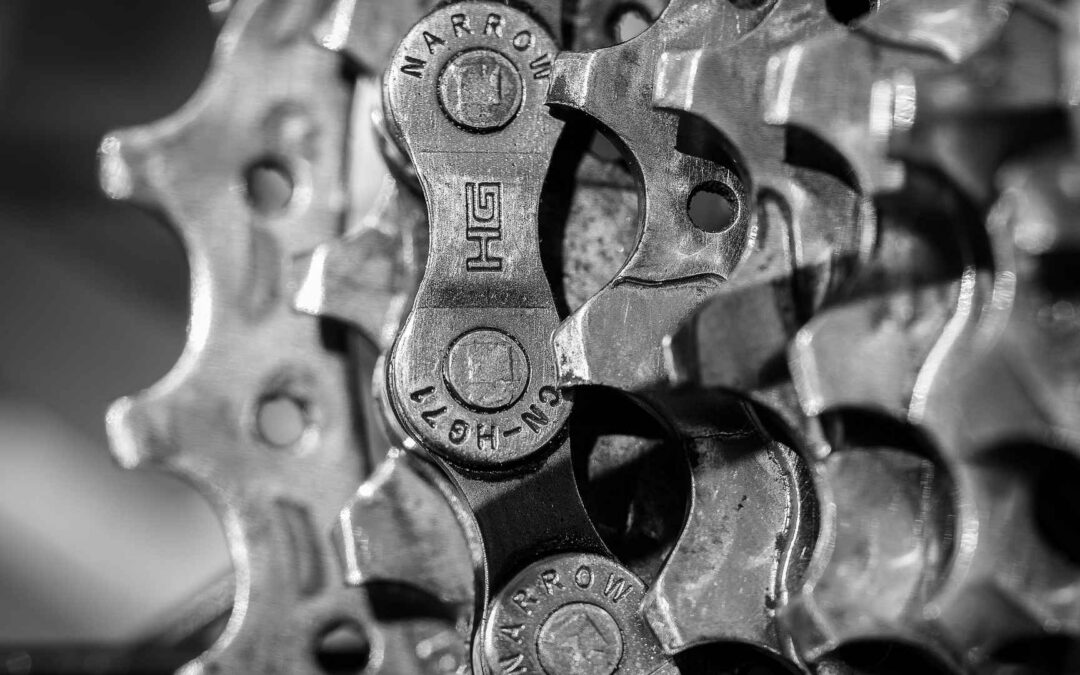
Lift chains are the component most people think of when forklift chain inspection comes up, and for good reason. A chain failure under load is one of the more serious mechanical events a forklift can experience.
Chain wear is measured by elongation. As pins and link plates wear against each other through thousands of lifting cycles, the chain stretches slightly. That stretch is gradual enough that it goes unnoticed until the chain is measured against its original specification.
A chain that has elongated beyond the manufacturer’s tolerance should be replaced without exception. Running an elongated chain puts stress on the anchor points and pulleys at the wrong contact angle, which accelerates wear on those components even after the chain is eventually replaced.
Beyond elongation, a few other chain conditions require attention.
- Rust and corrosion. Utah’s dry climate reduces some corrosion risk, but outdoor equipment or machines stored near wash bays still develop surface rust that weakens chain links over time.
- Cracked or broken side plates. Visible cracks on link plates indicate fatigue damage and require immediate replacement.
- Stiff or binding links. A chain that doesn’t flex smoothly through each link has internal corrosion or debris preventing proper articulation.
- Worn chain pins. Pins that have worn visibly smaller in diameter at contact points signal that replacement is overdue.
Chain anchor pins and keeper clips also need checking at each inspection. A loose or missing keeper clip is a direct safety hazard that an inspection catches in seconds.
Lubrication Is Not Optional
Both chains and mast components depend on proper lubrication to function correctly and last as long as they should. Dry chains wear exponentially faster than lubricated ones, and dry mast wear pads score the channel rails they’re supposed to protect.
Forklift lift chains should be lubricated with a penetrating chain lubricant, not a general purpose grease. Heavy grease sits on the surface and doesn’t reach the pin and plate contact points where friction actually occurs. A proper chain lubricant penetrates through the links and stays in place through the lifting cycle.
Mast wear pads and roller contact surfaces need lubrication appropriate for their material and load. Check the equipment manual for the correct specification. Using the wrong lubricant reduces its effectiveness and can attract debris that accelerates wear rather than reducing it.
A consistent lubrication schedule, tied to operating hours rather than the calendar, keeps both chains and mast components performing the way they were designed to.
OSHA Requirements for Mast and Chain Inspections
OSHA standard 29 CFR 1910.178 covers powered industrial truck safety and includes requirements directly relevant to mast and chain condition. The standard requires that forklifts be examined before being placed in service each day, and that any defects affecting safe operation be corrected before the forklift is used.
For mast and chain systems, this means operators need to check for visible chain damage, unusual play in the carriage, and abnormal sounds during test lifts as part of every pre-shift inspection. A defect found during that check requires the machine to be taken out of service until the issue is corrected by a qualified technician.
OSHA also requires that lift chain condition be assessed by a competent person, with replacement carried out according to manufacturer specifications. Keeping records of these assessments supports compliance and creates a documentation trail that protects the operation during any regulatory review.
Setting a Service Interval That Matches Utah Operations
Pre-shift checks cover the obvious. Deeper inspections at regular intervals catch what daily walk-arounds miss.
A structured approach works best when tied to actual operating hours. A few interval benchmarks work well for most Utah warehouse fleets.
- Every 250 hours: full chain elongation measurement, lubrication of chains and wear pads, roller visual inspection
- Every 500 hours: mast channel and roller clearance check, anchor pin and keeper clip inspection, wear pad thickness measurement
- Annually or as needed: full mast disassembly inspection for high-use equipment running three shifts
Connecting this to a broader preventive maintenance schedule keeps inspections from being treated as separate tasks and ensures nothing gets skipped during a busy week.
Tracking inspection results and service history across your fleet through a consistent forklift maintenance tracking process also lets you spot patterns. A mast that’s consuming rollers faster than comparable units in your fleet usually has an underlying cause worth finding before it becomes an expensive repair.
Catching Problems Before the Load Comes Down
Mast and chain failures are preventable in most cases. The components give clear warning signs well before they reach a failure point, and regular inspections are how those signs get noticed in time.
A Utah warehouse that inspects mast rollers, measures chain elongation, and keeps lubrication on schedule rarely deals with a sudden mast failure. The ones that do usually have a gap in their inspection process where a worn component went unnoticed until it gave out under load.
Getting a qualified technician involved for any inspection finding beyond routine lubrication is the right call. Professional forklift repair services handle chain replacement, roller service, and mast adjustments correctly the first time. More detail on keeping your full fleet in safe operating condition is available through JTS Forklift Service.