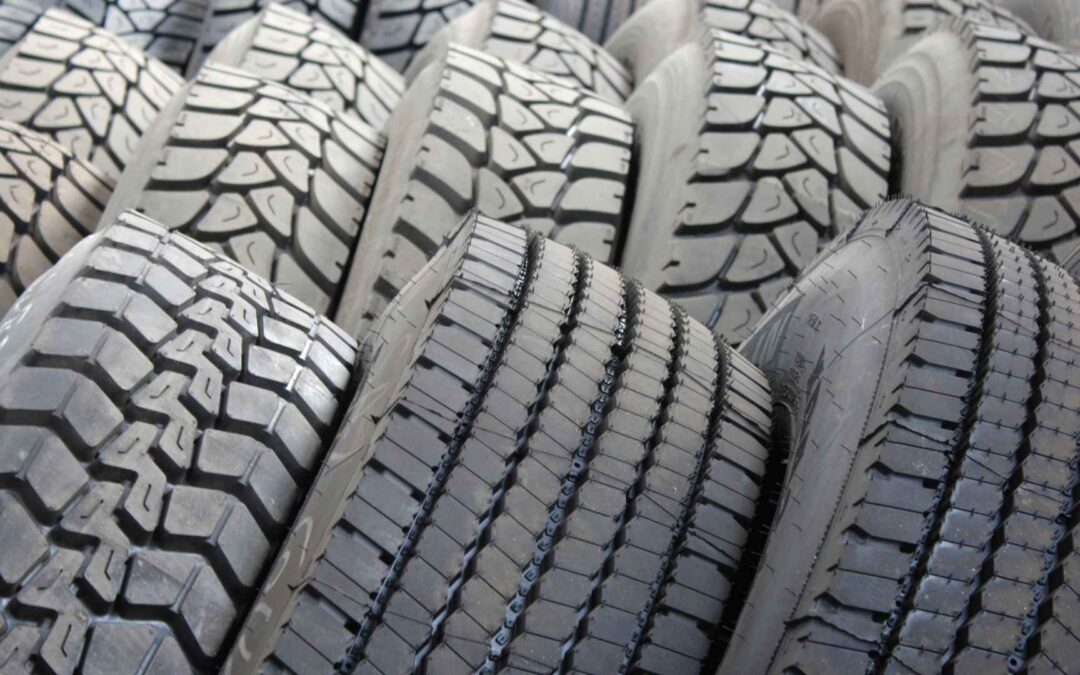
Forklift tires don’t blow out dramatically like a car tire on the highway. They wear down gradually, shift subtly, and keep working just enough that nobody pulls the machine from service until something goes wrong. That quiet decline is exactly why forklift tire wear signs get missed so often in busy Utah warehouses.
Knowing what to look for, and when to act on it, keeps your equipment safe and your operation moving. Here’s a practical breakdown of how forklift tires wear, what that wear does to safety, and when replacement stops being optional.
The Two Tire Types and How Each One Wears
Not all forklift tires age the same way. Cushion and pneumatic tires handle differently, wear for different reasons, and fail in different patterns. Knowing which type your fleet runs changes what you look for during inspections.
Cushion Tires in Utah Warehouses
Cushion tires are solid rubber pressed onto a steel band. They’re built for smooth indoor surfaces like concrete warehouse floors and loading docks. Most distribution and manufacturing facilities along the Wasatch Front run cushion tires because they handle tight aisles and hard flooring well.
Wear on cushion tires shows up in a few specific ways. The rubber flattens on the contact surface from constant weight and friction. Chunks tear away from the tread edge when a forklift turns sharply under a heavy load. Cracks develop across the sidewall as rubber dries out and loses flexibility over time.
Utah warehouses running multiple shifts accelerate all of these patterns. A cushion tire on a forklift doing sixty or seventy tight turns per shift in a narrow aisle wears unevenly and chunks faster than one doing long straight runs in a wide open space.
Pneumatic Tires on Utah Job Sites
Pneumatic tires carry air like a truck tire and handle outdoor surfaces, gravel lots, and uneven terrain far better than cushion tires can. Construction sites, lumber yards, and outdoor storage operations across Utah typically run pneumatic tires for this reason.
Wear on pneumatic tires looks closer to what most people recognize from vehicles. Tread depth decreases until the surface smooths out and grip drops. Cuts and punctures from debris on job sites damage the outer casing and sometimes reach the inner structure. Sidewall cracking from UV exposure is a real issue on outdoor equipment in Utah’s dry climate, particularly during long summer months.
What Worn Tires Actually Do to Safety
A forklift running on worn tires is not just a maintenance issue. It’s a stability issue, and stability directly determines whether loads stay on the forks and operators stay safe.
Worn cushion tires reduce the contact patch between the tire and the floor, which shrinks the base the forklift relies on for stability during turns and stops. A machine that handled a tight corner fine last month may start feeling loose or slow to respond this month as the rubber thins out.
Chunked or uneven tires cause vibration that operators feel through the entire frame. That vibration isn’t just uncomfortable. It affects precise load placement and puts extra stress on mast components, hydraulic fittings, and steering parts over time.
Pneumatic tires with low tread lose stopping ability on outdoor surfaces. Wet concrete, loose gravel, and packed dirt all demand grip that a smooth tire simply can’t provide. Braking distances increase, and load control gets harder on any grade.
Specific Signs It’s Time to Replace
Identifying worn tires early saves money and prevents accidents. A few specific indicators tell you a tire has reached the end of its service life.
- The wear line is exposed. Cushion tires have a safety line molded into the rubber. Once the tire wears down to that line, replacement is not optional.
- Chunking is visible on the tread edge. Missing rubber chunks reduce stability and worsen unevenly across the tire.
- Cracks run across the sidewall. Surface cracking from dry rot or UV exposure means the rubber has lost structural integrity.
- Tread depth is below safe limits on pneumatic tires. A simple tread depth gauge confirms whether grip is still adequate.
- The forklift vibrates more than usual. Increased vibration during normal operation often points directly to uneven tire wear.
- The machine pulls to one side. Uneven wear across tires on the same axle creates handling imbalance.
Utah operations running outdoor equipment should check for sidewall cracking more frequently during summer, since UV exposure and dry heat accelerate rubber degradation faster than in wetter climates.
Preventive Maintenance Tips That Extend Tire Life
Tires wear faster when other maintenance gets deferred. Keeping the rest of the forklift in good condition directly affects how long the tires last.
A few habits make a real difference across most Utah warehouse fleets.
- Check tire pressure on pneumatic tires at the start of every shift. Underinflated tires wear faster and put uneven load on the sidewall.
- Inspect cushion tires weekly for early chunking or cracking. Catching damage early lets you plan replacement instead of reacting to a mid-shift failure.
- Keep floor surfaces clear of debris. Metal scraps, pallet staples, and loose hardware on warehouse floors cut pneumatic tires and accelerate surface wear on cushion types.
- Avoid overloading. Running forklifts at or beyond rated capacity compresses tires past their design limits and speeds up wear across the entire contact surface.
- Train operators on smooth cornering. Sharp, fast turns under load tear cushion tire edges faster than any other single habit.
Tires are part of a broader preventive maintenance approach that keeps the entire machine running longer. A tire inspection that catches early wear also gives a technician the chance to spot related issues like uneven axle wear or brake problems contributing to abnormal tire stress.
Tracking tire condition alongside other metrics through a consistent forklift maintenance process makes it easier to spot patterns across your fleet before individual units become a safety concern.
Replacing Tires Before They Become the Problem
Tire replacement is one of the more predictable maintenance costs in forklift ownership. Unlike a hydraulic failure or an electrical issue, worn tires give you visible, measurable warning signs well before they become dangerous. Acting on those signs early keeps the cost manageable and keeps your operators safe.
If tires on your Utah fleet are showing any of the signs covered here, getting a proper inspection through forklift repair services confirms whether replacement is needed now or still a few weeks out. More detail on keeping your fleet running reliably is available through JTS Forklift Service.