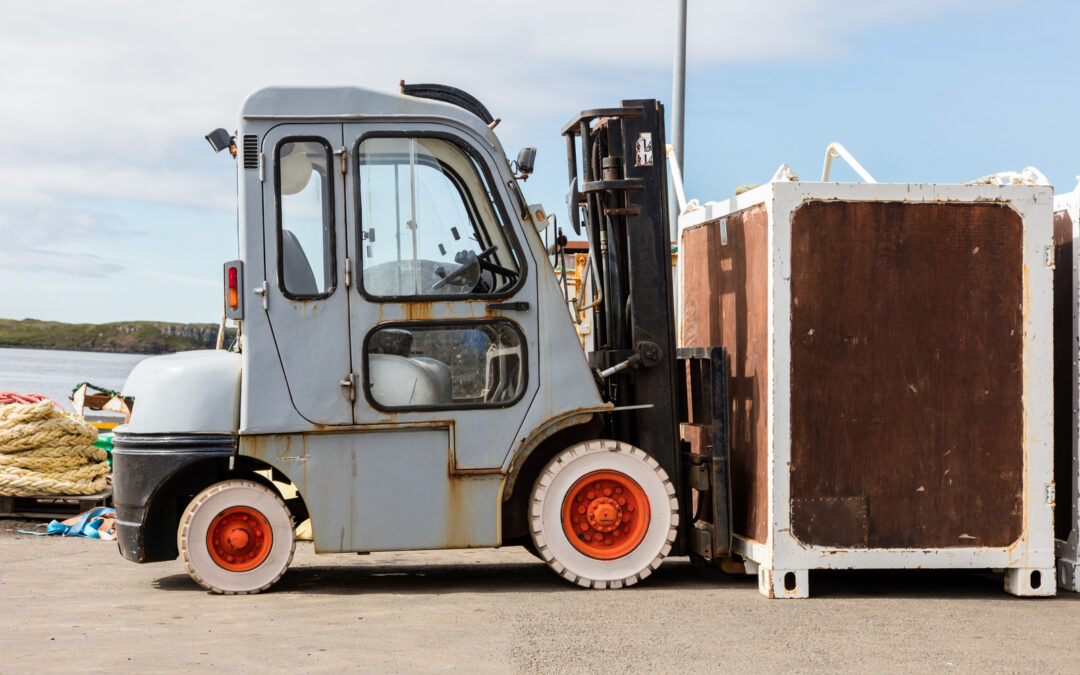
Arizona’s heat and dust create operating conditions that accelerate forklift wear faster than most other environments in the country. Summer temperatures in the Phoenix metro routinely exceed 110 degrees, hydraulic seals degrade faster, batteries strain under constant thermal stress, and dust infiltrates every system it can find.
JTS Forklift Service provides mobile repair and maintenance throughout Arizona. Knowing which warning signs to watch for — and acting on them quickly — is what separates operations that run smoothly from those that experience repeated unplanned downtime. For more on our Arizona coverage, see our page.
Fluid Leaks
Any fluid pooling under a forklift, or visible at hose connections and fittings, is a sign that something needs attention. Hydraulic fluid, engine oil, coolant, and transmission fluid all serve critical functions, and losing any of them puts internal components at risk.
In Arizona’s heat, already-worn hydraulic seals and hose fittings are more likely to fail. The constant expansion and contraction from extreme temperature swings break down material over time. If you notice fluid where it should not be, have it inspected rather than topping it off and continuing to operate.
Overheating
Forklifts in Arizona warehouses operate in an environment that already taxes their cooling systems. When a forklift starts running hotter than normal, the temperature gauge climbs, or you notice a burning smell, the cooling system is struggling.
For propane and CNG forklifts, a radiator clogged from dust accumulation is a common cause of overheating. For electric forklifts, overheating shows up as reduced performance, faster battery drain, and battery warning indicators. An overheating forklift should be taken out of service until the cause is identified.
Poor Lifting Performance
If your forklift is struggling to lift loads it used to handle without issue, or if lifting feels slow and hesitant, the hydraulic system is the first place to investigate. Low hydraulic fluid, a worn pump, contaminated fluid, or a failing cylinder can all reduce lifting performance.
Arizona heat degrades hydraulic fluid faster than in cooler climates. Fluid that would last its full service interval elsewhere may lose viscosity sooner under extreme heat, reducing system pressure and lifting capacity.
Steering Problems
Difficulty steering, unusual resistance in the wheel, or a forklift that does not track straight are all warning signs. Steering issues can come from low power steering fluid, worn components, or hydraulic system problems affecting the steering circuit. In a warehouse environment, steering problems increase the risk of load drops, pallet damage, and collisions.
Unusual Sounds
A well-maintained forklift is relatively quiet in operation. New sounds are almost always a sign that something has changed.
Common sounds that indicate a repair is needed include:
- Grinding or squealing from the brakes
- Clicking or popping from the mast during lift cycles
- Whining from the hydraulic pump under load
- Knocking or rattling from the engine on propane or CNG units
- Unusual humming from motor components on electric forklifts
Battery Problems on Electric Forklifts
Arizona heat is particularly hard on electric forklift batteries. Signs of battery trouble include a battery that drains faster than normal, one that takes unusually long to fully charge, excessive heat from the battery during or after charging, and visible corrosion at terminals.
Dashboard Warning Lights
A warning light on the dashboard should never be ignored. Even if the forklift seems to be running fine, the system detected something outside normal parameters. Document fault codes and report them to your service provider.
For our full forklift service and repair capabilities, see our page. To find service near your facility, visit our repair resource. Call JTS Forklift Service’s Arizona team at (480) 404-5023.
GET IN TOUCH WITH JTS FORKLIFT SERVICE