Operating industrial equipment in the Southwest requires a clear understanding of extreme environmental conditions. From busy distribution centers in Phoenix to rugged outdoor manufacturing yards across the state, material handling equipment faces intense daily stress. The tires on your machinery bear the full weight of these heavy loads while absorbing the friction and heat of the ground below.
We understand that material handling equipment plays a critical role in daily operations. The team at JTS Forklift Service focuses on providing reliable guidance to help you maintain safe and efficient workflows. This guide explores how the harsh desert climate impacts your equipment and outlines the most frequent tire problems facilities experience.
Why Forklift Tire Maintenance Matters
Your tires are the only point of contact between your heavy machinery and the warehouse floor or outdoor yard. They dictate the overall stability, handling, and braking distance of the machine. Ignoring tire health directly compromises the safety of your operators and the structural integrity of the loads they carry.
Implementing consistent forklift maintenance arizona businesses trust is the most effective way to protect your investment. Routine inspections identify early signs of rubber degradation before a complete tire failure disrupts your operational productivity.
How Extreme Arizona Heat Impacts Forklift Tires
High temperatures drastically alter the physical properties of industrial rubber compounds. When ambient temperatures rise above 100 degrees, the operating environment becomes hostile to standard material handling tires.
Tire Wear Caused by Hot Concrete and Asphalt
Outdoor industrial yards and construction sites feature concrete and asphalt surfaces that absorb and retain solar radiation. The surface temperature of an Arizona loading dock can easily exceed 140 degrees during the summer months.
When your machinery travels across these scorching surfaces, the friction generates additional internal heat within the tire. This compound heating effect causes the rubber to soften and break down at an accelerated rate. Rapid tread loss is highly common for fleets operating continuously on hot pavement.
Common Forklift Tire Problems in Warehouses and Industrial Yards
Warehouse managers and fleet operators frequently encounter specific types of tire damage. Understanding these common forklift tire problems arizona facilities face helps you train your staff to spot issues early.
Tire Chunking, Cracking, and Surface Damage
Tire chunking occurs when large pieces of rubber tear away from the main body of the tire. This damage is typically caused by driving over sharp debris, metal grating, or uneven loading dock plates.
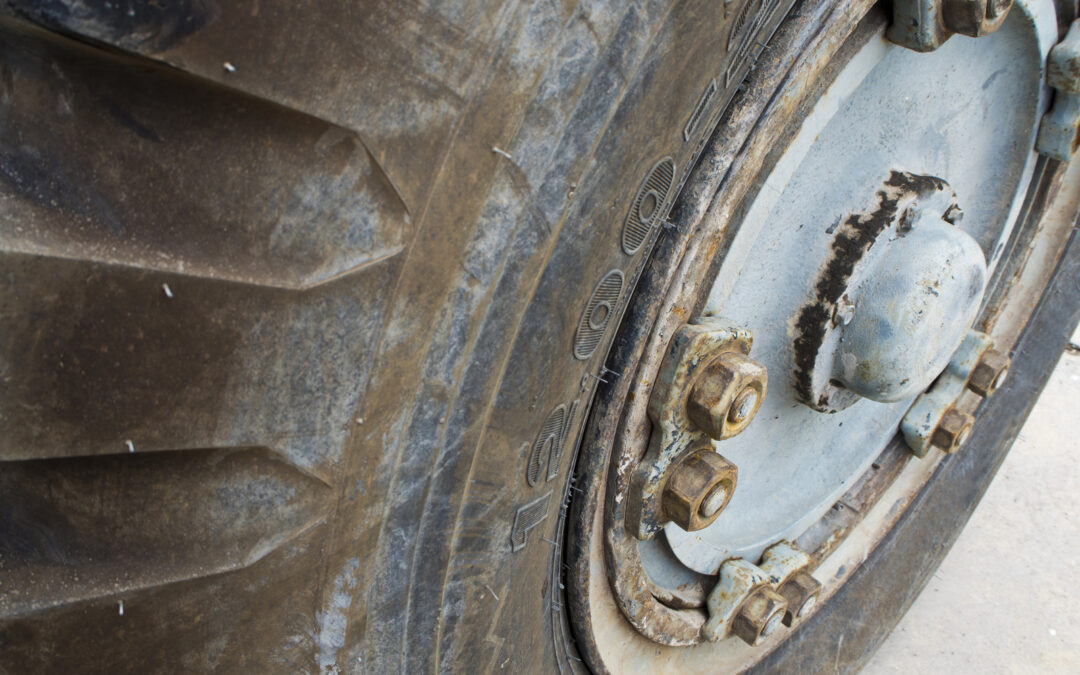
Cracking is another prevalent issue in arid climates. The dry desert air strips moisture from the rubber, leading to dry rot and deep structural cracks. Once a tire begins to crack or chunk, it loses its structural integrity and cannot safely support maximum weight capacities.
Problems Caused by Rough Warehouse Flooring and Outdoor Terrain
Not all industrial surfaces are smooth. Deep cracks in warehouse concrete, exposed expansion joints, and gravel outdoor yards subject tires to constant physical impacts. Continuous operation over rough terrain accelerates surface wear and increases the likelihood of sudden blowouts for air-filled tires.
Uneven Tire Wear and Alignment Issues
If a machine consistently carries off-center loads or operates with damaged steering components, the tires will wear down unevenly. Uneven wear forces the machine to lean to one side, which drastically reduces load stability. If you notice the tread disappearing on one side of a tire much faster than the other, you likely have an alignment or suspension issue requiring immediate diagnostic attention.
The Risks of Operating on Worn Forklift Tires
Because forklift downtime can disrupt productivity, some managers hesitate to pull a machine from active duty just for worn tires. However, operating on degraded rubber presents severe workplace hazards.
How Damaged Tires Affect Handling and Load Stability
A forklift with worn tires suffers from reduced traction and poor handling. Operators will struggle to stop safely or navigate tight corners. More importantly, severely worn tires lower the overall clearance of the machine. This shift in the center of gravity makes the forklift highly unstable when lifting heavy pallets to elevated storage racks, increasing the risk of a catastrophic tip-over accident.
Signs Your Forklift Tires Need Replacement
Fleet managers must monitor equipment closely to determine when replacement is necessary. Watch for these clear indicators:
- The tire tread has worn down to the manufacturer safety line.
- Visible chunks of rubber are missing from the tire surface.
- Deep radial cracks appear along the sidewall.
- The tire exhibits noticeable flat spots from hard braking.
Addressing these warning signs promptly through professional forklift tire replacement arizona services ensures your facility remains compliant with safety standards.
Choosing the Right Equipment: Cushion vs Pneumatic Tires
Selecting the correct tire type for your specific operating environment extends equipment lifespan and improves operator comfort.
Cushion tires are made of solid rubber molded directly onto a metal band. They are highly compact and provide a smaller turning radius. This makes them the ideal choice for indoor warehouse environments with smooth concrete floors.
Pneumatic tires function similarly to traditional car tires. They are wider, longer, and designed to absorb shock. Solid pneumatic tires are puncture-proof and excel in rugged outdoor industrial applications, lumber yards, and construction sites. Standard air-filled pneumatics offer a comfortable ride but carry the risk of punctures from sharp yard debris.
Preventive Maintenance Strategies for Extending Tire Lifespan
Proactive care helps you maximize the productive hours of every tire in your fleet. Implement daily visual inspections where operators check for debris embedded in the rubber and verify tire pressure for pneumatic models.
Keeping your warehouse floors clean is a simple but highly effective preventive strategy. Sweeping away loose pallet splinters, nails, and shrink wrap prevents abrasive materials from grinding into the tire surface.
Establishing a formal forklift service and repair schedule allows certified technicians to monitor tread wear patterns accurately and plan replacements before safety becomes a concern.
Benefits of Proactive Forklift Repair and Maintenance Service
Partnering with an experienced service provider takes the guesswork out of fleet management. Our technicians work efficiently to diagnose issues and perform repairs that support long-term equipment reliability.
Professional maintenance providers evaluate your specific operational environment to recommend the best tire compounds for your facility. Utilizing a trusted partner for regular Arizona operations support ensures your machinery receives targeted care designed to reduce operational downtime and extend the life of your critical components.
Frequently Asked Questions (FAQ)
How often should forklift tires be replaced?
Replacement intervals depend heavily on usage, load weights, and operating surface conditions. Generally, tires need replacement when the tread wears down to the 50-percent mark or reaches the manufacturer safety line on the sidewall.
Can Arizona heat cause a pneumatic forklift tire to blow out?
Yes. High temperatures cause the air inside pneumatic tires to expand. If a tire is already overinflated or severely worn, the added pressure from the heat and heavy loads can lead to a sudden blowout.
Is it safe to drive a forklift with chunked tires?
No. Tire chunking creates an uneven driving surface. This causes the machine to vibrate excessively, which damages the suspension, increases operator fatigue, and severely compromises the stability of elevated loads.
What is the best way to prevent flat spots on forklift tires?
Flat spots typically occur from aggressive braking or leaving a heavy machine parked in the same position for an extended period. Training operators to brake smoothly and ensuring the machine is unloaded before long-term parking will help prevent this issue.
Partner with JTS for Forklift Maintenance in Arizona
Understanding how Arizona’s climate affects your equipment is the first step toward reducing operational downtime. Proactive forklift maintenance and timely tire replacement are essential for keeping your fleet safe, compliant, and efficient.
The technicians at JTS Forklift Service have the experience to identify wear patterns, diagnose underlying issues, and recommend the correct tire types for your specific environment. Contact us today to schedule a comprehensive tire inspection or to establish a preventive maintenance plan for your facility.
GET IN TOUCH WITH JTS FORKLIFT SERVICE