Tires are one of the last things buyers think about when evaluating a forklift, and one of the first things to cause a problem once the equipment is in service. Forklift tires for sale come in two fundamentally different types, and picking the wrong one for your application creates issues that have nothing to do with tire quality and everything to do with fit.
Here’s how cushion and pneumatic tires actually differ, and how to figure out which one belongs on your equipment.
What Makes Cushion Tires Different
Cushion tires are solid rubber, molded directly onto a metal band or core with no air chamber inside. Because there’s no air to lose, cushion tires can’t go flat, which makes them a low-maintenance option in the right setting.
Cushion tires sit lower to the ground than pneumatic tires, which gives cushion-equipped forklifts a lower overall profile and a tighter turning radius. This makes them well suited to indoor warehouse environments with smooth concrete floors and narrow aisles, where maneuverability and a compact footprint matter more than off-road capability.
The tradeoff is ride quality and surface tolerance. Cushion tires transmit more vibration to the operator and equipment than pneumatic tires, and they don’t perform well on uneven, gravel, or outdoor surfaces where their solid construction can’t absorb the same impact a pneumatic tire handles more comfortably.
What Makes Pneumatic Tires Different
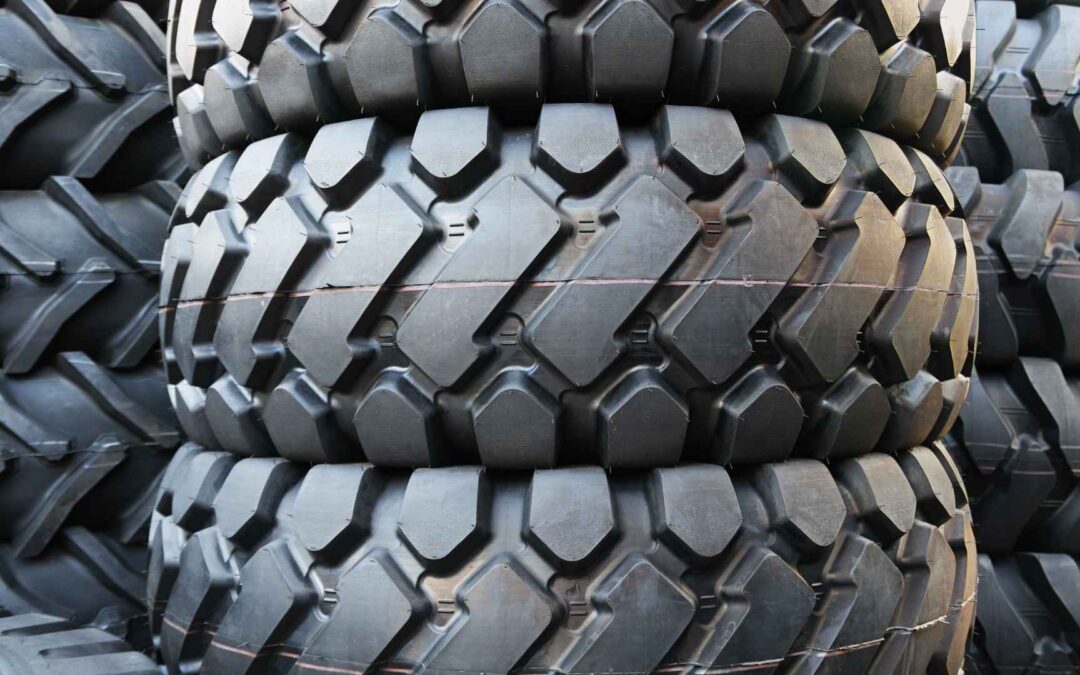
Pneumatic tires come in two main forms, each designed to handle conditions that cushion tires are not suited for. Both share a taller profile that provides more ground clearance and better performance on uneven or outdoor surfaces.
Air-Filled Pneumatic Tires
Air-filled pneumatic tires are similar in construction to a truck tire. They offer the smoothest ride of the available options, absorbing bumps and rough terrain more effectively than either cushion or solid pneumatic tires. Their downside is vulnerability to punctures, which makes them a riskier choice in environments with debris, nails, or sharp material on the ground.
Solid Pneumatic Tires
Solid pneumatic tires are molded from solid rubber but share the same tread pattern and shape as an air-filled tire. They bridge the gap between the two categories, offering the taller profile and outdoor capability of a pneumatic tire without the puncture risk that comes with an air-filled design. This makes solid pneumatic tires a common choice for outdoor or mixed-use operations that need to avoid the downtime a flat tire would cause.
Matching Tire Type to Surface and Application
The right tire choice comes down almost entirely to where and how the forklift actually operates, rather than a general preference for one type over another.
- Smooth indoor concrete floors favor cushion tires. The lower profile, tighter turning radius, and flat-proof construction all align well with warehouse environments where the equipment never leaves a paved, even surface.
- Outdoor lots, gravel, or uneven surfaces favor pneumatic tires, whether air-filled or solid. The taller profile and improved shock absorption handle the kind of surface irregularity that would cause excessive wear and a rough ride on cushion tires.
- Mixed indoor-outdoor use often points toward solid pneumatic tires specifically, since they provide the outdoor capability of a pneumatic tire without the puncture vulnerability of an air-filled version, making them a practical middle ground for operations that move between environments throughout a shift.
- Debris-heavy environments, including construction sites, lumber yards, or scrap handling operations, generally favor solid tires of either type over air-filled pneumatic tires, given the higher risk of punctures from sharp material on the ground.
Wear Signs Worth Watching For
Both tire types wear over time, though the visible signs differ somewhat between them.
Cushion tires typically display wear in the following ways:
- Flattening or chunking across the tread surface
- Visible separation between the rubber and the metal band in more advanced cases
- Reduced ground clearance as the tire wears down, which can affect stability during turns or on uneven surfaces
Pneumatic tires show wear differently depending on whether they are air-filled or solid:
- Tread depth reduction, similar to a standard vehicle tire
- Sidewall cracking from UV exposure and age
- Uneven wear on air-filled pneumatic tires caused by improper inflation, which also affects handling
- More predictable wear on solid pneumatic tires, since there is no air pressure to monitor or maintain
Uneven wear patterns on any tire type can point to alignment issues elsewhere on the forklift, which is worth having checked rather than simply replacing the tire and expecting the same wear pattern not to repeat. Our detailed breakdown of forklift tire wear signs covers what specific wear patterns typically indicate, beyond simple age-related tread loss.
Why Tire Choice Affects More Than Comfort
Choosing the wrong tire type for an application creates problems beyond a rougher ride. A cushion-tired forklift used regularly on gravel or uneven outdoor surfaces will wear through tires much faster than the same unit running exclusively on smooth concrete, since the tire simply isn’t built to handle that kind of surface irregularity.
Similarly, air-filled pneumatic tires used in an environment with frequent debris on the ground will see far more puncture-related downtime than a solid pneumatic option would in the same setting. Matching tire type to the actual operating environment from the start avoids both premature wear and avoidable downtime tied to a mismatch between the tire and the surface it’s working on.
Keeping Tires Maintained Once the Right Type Is Chosen
Picking the correct tire type is only the first step. Ongoing maintenance, including regular wear inspections and, for air-filled pneumatic tires, proper inflation checks, extends tire life regardless of which type is on the equipment. Our full guide on forklift tire maintenance covers the specific upkeep steps that keep tires performing well and help catch developing issues before they turn into an unplanned tire replacement.
For operations in hotter climates specifically, heat adds its own wear considerations worth understanding. Our page on forklift tire problems in Arizona covers how sustained heat accelerates certain wear patterns, particularly relevant for outdoor or mixed-use operations running pneumatic tires in high-temperature conditions.
Getting the Right Tires for Your Equipment
Choosing between cushion and pneumatic tires comes down to matching the tire to the surface and environment your forklift actually operates in, not picking based on which option sounds more capable in general. A conversation with JTS Forklift Service can help identify the right tire type and size for your specific equipment and application, whether that means a straightforward cushion tire replacement or a switch to a pneumatic option better suited to how your fleet actually works.