More Arizona warehouses are dropping the wait-and-see approach to forklift care. Instead of calling a technician after something breaks, they’re locking in a scheduled maintenance plan and letting the calendar do the work. Forklift service contracts Arizona operations are signing up for now cover set inspection dates, dedicated technician time, and a fixed monthly cost instead of a surprise bill.
The shift makes sense once you look at what desert heat does to equipment. A forklift maintenance agreement Arizona businesses commit to isn’t just about avoiding breakdowns. It’s about protecting equipment that ages faster here than almost anywhere else in the country.
The Desert Heat Problem Nobody Talks About Enough
Arizona summers push forklift components past their comfortable operating range for months at a time. Hydraulic seals harden faster. Batteries lose capacity quicker. Rubber components crack under UV exposure that other states barely deal with.
Most maintenance advice treats Arizona like any other market and just tells you to check fluids regularly. That misses something important. Heat damage compounds. A seal that’s slightly stressed from June heat doesn’t reset over the winter. It carries that wear into next summer already weakened, and the following year’s heat finishes the job faster than year one did.
This is the real argument for scheduled maintenance over reactive repair. A plan built around fleet maintenance Arizona operations actually need accounts for that compounding effect, catching stress before it stacks up year over year.
Recurring Inspections Catch What One-Time Checks Miss
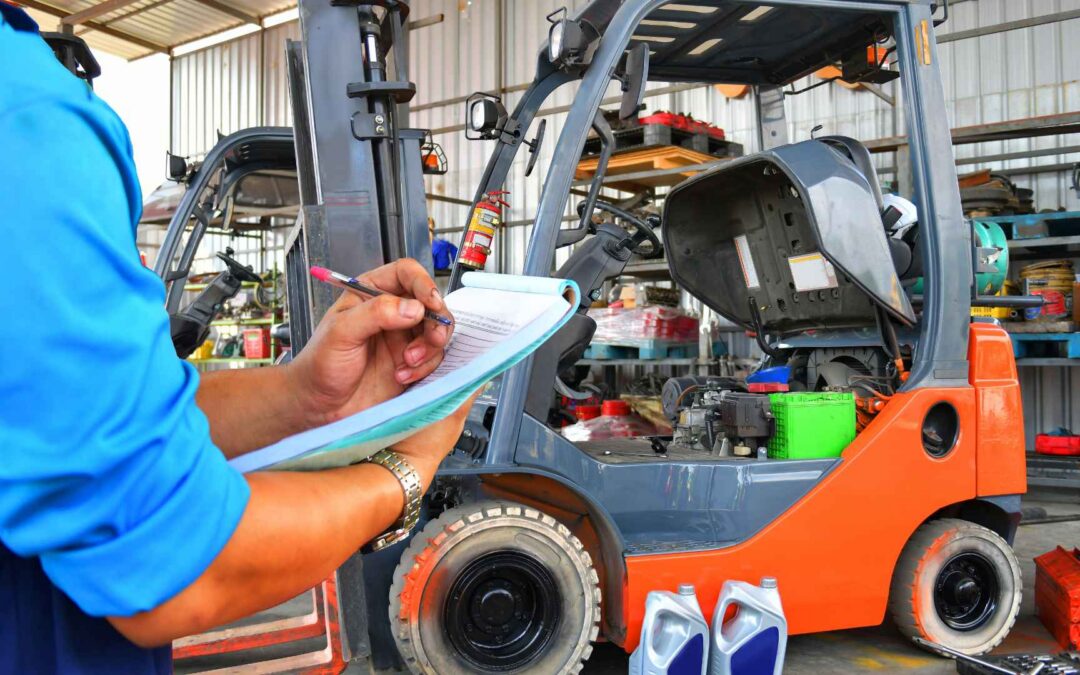
A single inspection tells you how a forklift looks that day. Recurring inspections tell you how it’s trending, and that trend line is where the real value sits.
Technicians who see the same equipment every quarter notice things a one-time inspector never would. A hydraulic fluid that’s darkening slightly faster than last quarter. A battery holding voltage a bit lower than three months ago. Small shifts that mean nothing in isolation but signal a problem building over time.
Our page on preventive maintenance strategies for Arizona operations covers how climate-specific inspection points differ from standard checklists used in milder states. The interval itself matters too, and getting that right depends on how hard your fleet actually works.
Setting the Right Inspection Interval
Not every forklift needs the same inspection schedule. A machine running light loads for a few hours a day wears differently than one running three shifts on a warehouse floor.
A few factors determine how often inspections should happen:
- Daily operating hours and shift patterns
- Indoor versus outdoor use, since sun exposure accelerates wear
- Load weight and frequency of heavy lifting
- Age of the equipment and prior repair history
Our breakdown of forklift maintenance frequency walks through how to match interval timing to actual usage instead of guessing based on a generic quarterly default.
Technician Scheduling Solves a Problem Most Warehouses Don’t See Coming
Here’s something that rarely comes up in maintenance conversations. When you call for repairs on an as-needed basis, you often get a different technician every time. Each one starts from zero on your equipment history.
A scheduled plan usually means the same technician, or a small consistent team, handles your fleet visit after visit. That continuity builds a kind of institutional knowledge about your specific machines. The tech remembers that unit three had a hydraulic issue last spring, or that the battery on unit five has been running warmer than the others.
This matters more than most fleet managers realize. A technician who knows your equipment catches subtle changes faster than one seeing it cold. It’s the same reason a regular doctor tends to catch health changes a walk-in clinic might miss.
Scheduled technician time also means service happens when it fits your operation, not when a repair truck happens to have an opening. Facilities using mobile forklift repair across Arizona warehouses can plan service windows around slower shifts instead of losing productive hours to whenever a technician becomes available.
Predictable Costs Change How Fleet Budgets Actually Work
Reactive repair spending swings wildly from month to month. One quarter you spend almost nothing. The next, a pump failure eats through your entire annual maintenance budget in a single invoice.
Scheduled plans flatten that curve into something a finance team can actually plan around. A few specific budgeting benefits show up once a plan is in place:
- Monthly or quarterly costs stay consistent instead of spiking unpredictably
- Capital planning gets easier since major failures happen less often
- Emergency repair costs, which typically run higher due to rush fees, drop significantly
- Multi-unit fleets get combined into one predictable line item instead of scattered invoices
For operations managing five, ten, or twenty units, that predictability alone often justifies the switch. Budgeting for a known monthly cost beats budgeting for a hypothetical emergency that might cost triple in any given quarter.
Extending Equipment Life Beyond the Obvious
Everyone knows maintenance extends equipment life in a general sense. What gets missed is how much of that extension comes from catching problems before they cascade into other systems.
A hydraulic leak left unaddressed doesn’t stay contained to the hydraulic system. Fluid loss reduces lubrication, which increases friction on pump components, which generates more heat, which degrades the remaining fluid faster. One small leak becomes a system-wide stress event within weeks if nobody catches it early.
Scheduled maintenance interrupts that cascade at the earliest possible point. A technician who spots a minor seep during a routine visit stops the chain reaction before it starts. That’s the difference between a seal replacement and a full cylinder rebuild, and it’s the kind of savings that shows up in equipment lifespan more than in any single invoice.
Arizona’s climate makes this cascading effect happen faster than in cooler states. Heat accelerates every stage of that breakdown chain, which means the window between “minor issue” and “major failure” is genuinely shorter here. Scheduled inspections close that window before it becomes expensive.
What a Good Maintenance Plan Actually Looks Like
A maintenance plan built for Arizona conditions should look different from a generic national template. A few elements separate a plan that actually protects your fleet from one that just checks a box:
- Inspection intervals adjusted for heat exposure, not just calendar dates
- Technician continuity so the same team learns your equipment over time
- Coverage for both electric battery systems and combustion fluid systems
- Mobile service options that reduce downtime instead of adding transport delays
A plan missing any of these tends to underperform compared to one built specifically around desert operating conditions. Generic maintenance schedules designed for moderate climates simply don’t account for how fast Arizona heat degrades components.
The Bigger Picture for Arizona Fleets
Scheduled maintenance isn’t a trend so much as a response to how tough Arizona conditions actually are on equipment. Warehouses running reactive repair schedules are essentially betting that nothing major breaks between now and whenever they notice a problem. In desert heat, that bet gets riskier every summer.
Fleet managers who’ve made the switch generally report fewer surprise repairs and a clearer sense of what their equipment actually costs to run. Reviewing your current forklift service and repair approach against a scheduled plan is a reasonable next step if breakdowns have been catching your team off guard. More detail on how these plans work is available through JTS Forklift Service.